
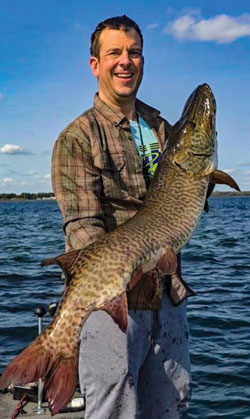
“I got my Merchant Mariner license, which is a Coast Guard license for small-boat operators. I took people fishing for salmon on the Togiak River,” he relates.
Back in the ’Burgh his uncle wanted to educate people about wild and farmed salmon with a festival, so Luke opened a grill in front of the Strip’s famous fish emporium. But a real restaurant had always been at the back of his mind, so when he was told about a great spot toward the middle of the Strip he was finally convinced to jump; he opened in 2012. Why another fish eatery within a few blocks of at least two others? Luke reasons, “If you take good care of customers they’ll become repeats and spread good word of mouth.” Sounds like a strong conviction, a commitment to service for the 120 people the main restaurant accommodates. There are also private dining rooms, one of which was once the site of a Steelers New Year’s Eve party.
I consulted the Wild Alaskan Grille menu to get a sense of how Luke takes good care of everybody with quality food and emphasizes taste and originality. The first thing that caught my eye was a Bloody Mary with a fried soft-shell crab on top (along with something I couldn’t easily identify).
“My original bartender, Tommy Butler, was from Ireland and he begged me to put the drink on the menu. I told him that it was a stupid idea and nobody would buy it; but I finally caved. We sold ten the first day and it’s become one of our best sellers,” Luke relates. “You can dip the crab into the drink for a unique flavor.” That decoration I couldn’t identify is a slice of in-house-made candied bacon.
Luke gets his soft-shell crabs during the run off the southern mid-east coast, especially the largest run near Maryland. He freezes them but runs out around December, at which point they have to be sourced. And, yes, the crabs—as are all other fried items on the menu—really are hand breaded in panko breadcrumbs and a house-developed seasoning mix. Other in-house creations are lobster bisque, tartar and cocktail sauces, and a wasabi glaze. It was also impressive to find crème fraiche as a standard garnish, a rather unusual and delicious touch.
Continuing down the novel-length menu, which includes about a dozen meat items, I found what seemed to be a five-inch-high catfish sandwich that left me wondering how people eat it. “I think people in Pittsburgh are used to thick sandwiches!” quipped Luke.
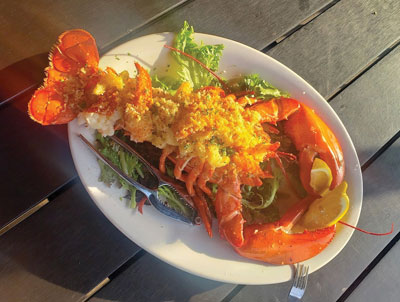
There are tacos, but with everything else I wondered why. “They are fun to eat and a good seller. Customers want them,” notes Luke.
Sushi? Very simply, it is another good seller and the Grille has a dedicated sushi chef. There is also a dessert chef for anybody still hungry at the end of a generously portioned meal.
I did ask Luke if he had ever had pizza on the menu, and yes—and his recipe was enticing. “It was made with grilled flatbread, garlic-butter-sauced shrimp, lobster, arugula, parmesan, mozzarella, and crème fraiche,” he says. “People liked it, but when the restaurant is busy pizzas are hard to execute quickly.”
On a personal note, I (thankfully) didn’t find on the menu a fishy dish my husband and I were served at an upscale restaurant near the Brandenburg Gate in Berlin. It was sardine ice cream—really.
At Luke’s restaurant, it all comes down to the fact that customers can trust this knowledgeable fisherman to provide quality seafood while working with an innovative staff to keep costumers’ palates tingling with unique creations.
Except for sardine ice cream.
1 cup yellow cornmeal
1 tbs kosher salt
1 tsp black pepper
2 tbs smoked paprika
2 tbs garlic powder
1 tbs onion powder
1 tsp cayenne pepper
1 tsp dried oregano
1 tsp thyme
Mix thoroughly and use as breading; liberally coat to fish, oysters, or chicken before deep- or pan-frying.
Cynthia F. Weisfield is a freelance writer whose articles about art and food appear regularly in multiple publications. She is a graduate of the University of Chicago and has recently completed a biography (as yet unpublished) about noted abstract expressionist artist Sonia Gechtoff. She lives in Mt. Lebanon.