
 As someone who’s spent a career watching Pittsburgh reinvent itself, I’ve come to believe our biggest opportunities often lie in how we respond to change. The conversation around housing is in one of those moments.
Lately, inclusionary zoning and developer mandates have dominated local headlines—framed as the path to more affordable housing. But for a city still recognized as one of the nation’s most affordable markets, I’d argue we’re asking the wrong question. Our problem isn’t that housing costs too much; it’s that our economy grows too little.
When we talk about affordability, we should be talking about opportunity. The Strip District proves what happens when economic development and thoughtful policy come together. Over the last decade, public and private investment in projects like 3 Crossings, District 15, The Vision, and The Terminal turned a corridor of warehouses into a nationally known innovation hub. Robotics and tech companies, many born out of Carnegie Mellon and Pitt, now call the Strip home—bringing thousands of jobs and millions in new tax revenue. Those dollars support the very programs that make housing attainable for residents across the city.
That’s the power of economic growth: It builds the tax base that funds affordability.
Contrast that with the impact of strict inclusionary zoning. Mandates that require below-market units within new developments may sound well-intentioned, but they often make it harder to build housing at all. In today’s high-cost, high-interest environment, added regulations can mean fewer projects, fewer jobs, and ultimately, fewer homes. The result is the opposite of what we intend.
The path forward lies not in restriction, but in reinvestment—in policies that attract employers, grow payrolls, and strengthen our revenue base. Cities like Columbus understand this. They recently issued a $500 million bond, leveraging projected tax growth to fund over $200 million in affordable housing and $100 million in new infrastructure. Pittsburgh’s capital program that same year totaled just $62 million—not because we lack ideas, but because our tax base simply can’t support more. Growth changes that equation.
Pittsburgh’s history is full of reinvention—from steel to science, from smoke to skyline. Each chapter began with the same foundation: jobs. Jobs create opportunity, opportunity creates stability, and stability creates affordability.
If we want a Pittsburgh that remains accessible to all, we must think bigger than mandates. We must grow—thoughtfully, inclusively, and ambitiously—so that every neighborhood, from the Hill to Hazelwood, benefits from a stronger regional economy.
True affordability doesn’t come from zoning lines. It comes from prosperity that reaches everyone.
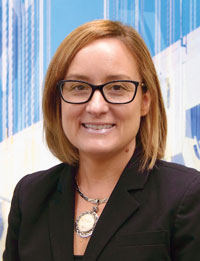
Megan Stearman has worked in real estate and community development for the past 25 years. She currently works for Strip District-based Oxford Development Company, developer and manager of 3 Crossings, and serves on the board of directors of Strip District Neighbors.